Managing construction projects is not easy. Contractors, estimators, engineers, architects, and project managers have to handle many tasks at the same time. From preparing cost estimates to sharing project files, every step needs accuracy, speed, and proper communication.
In the construction industry, even a small delay or mistake can affect the complete project budget and timeline. That is why using the right digital tools is very important. Modern apps and online platforms help construction professionals save time, reduce errors, improve communication, and manage projects more efficiently.
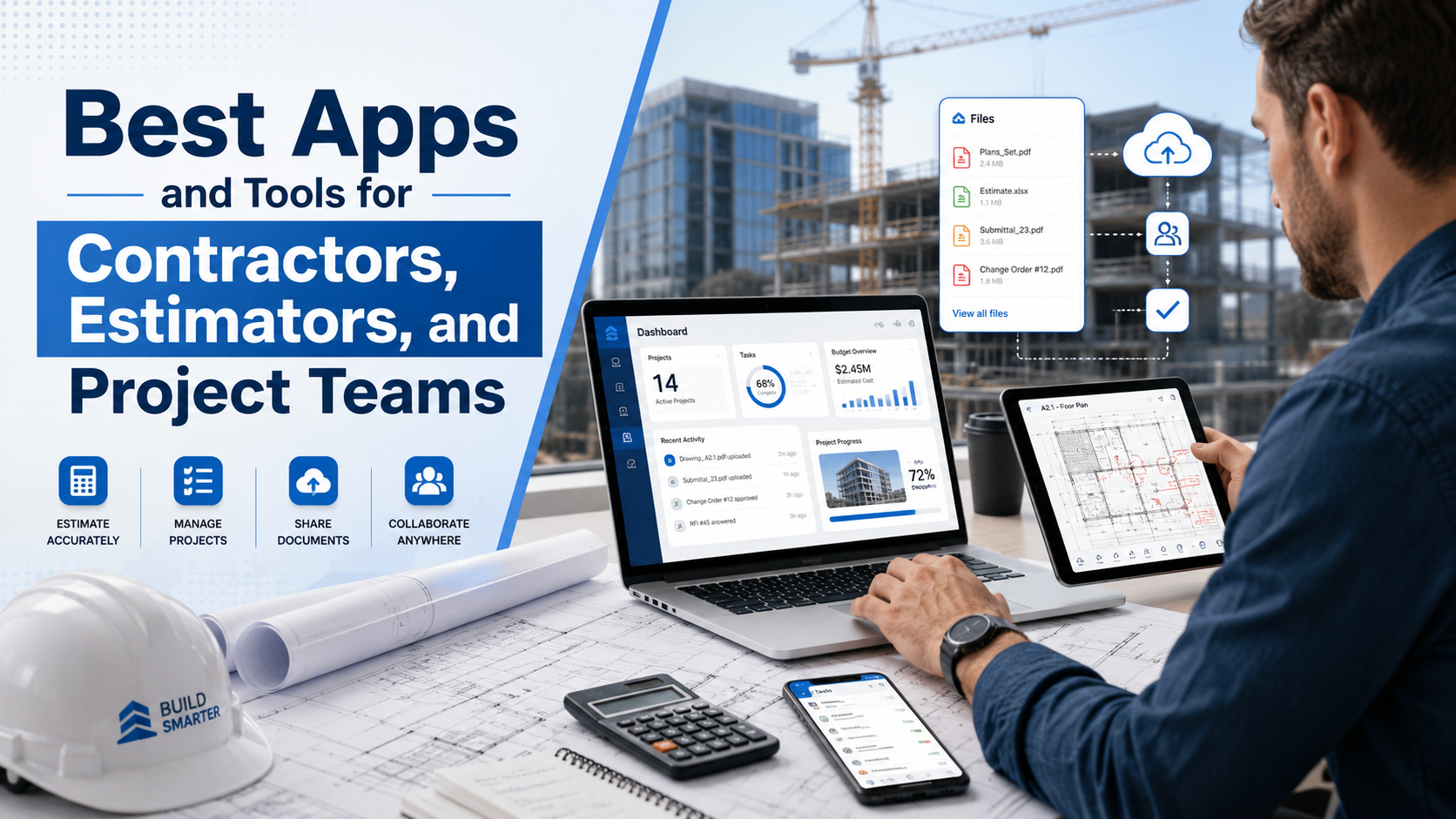
In this article, we will discuss some of the best apps and tools that contractors, estimators, and project teams can use to improve their daily workflow.
1. Construction Estimating Software
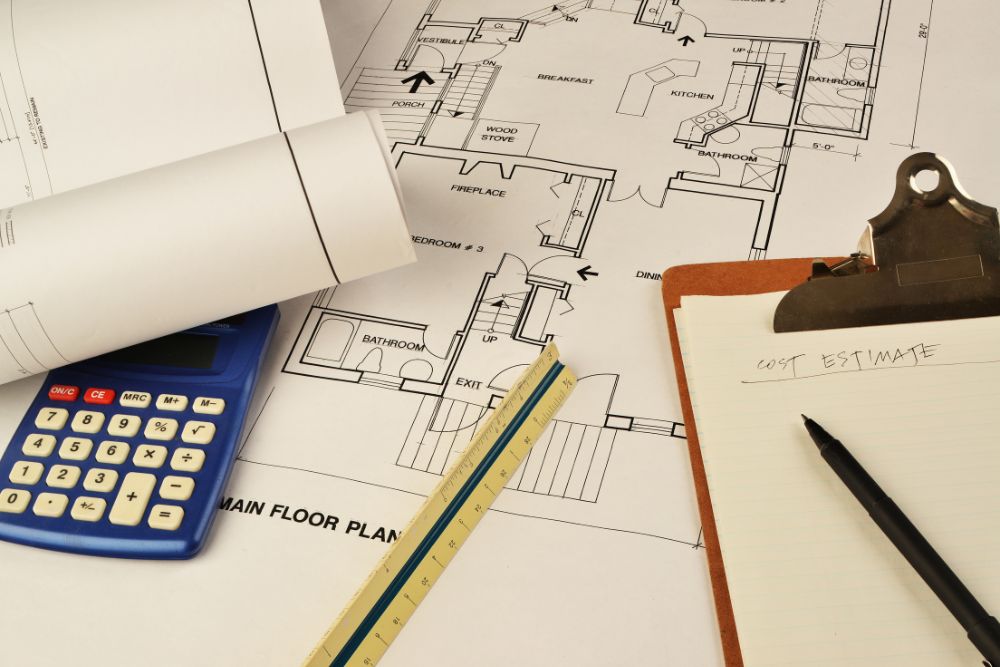
Accurate cost estimation is one of the most important parts of any construction project. Before starting a project, contractors need to calculate material costs, labor charges, equipment costs, overheads, and profit margins.
Construction estimating software helps professionals prepare accurate estimates quickly. Instead of using manual calculations, estimators can use digital tools to create detailed and organized estimates.
These tools are useful for:
- Quantity takeoff
- Material cost calculation
- Labor cost estimation
- Bid preparation
- Budget planning
- Project cost comparison
For contractors and construction companies, professional estimating services can also save time and improve bidding accuracy. A well-prepared estimate can help businesses win more projects and avoid financial loss.
2. Project Management Tools
Construction projects involve many people, including contractors, clients, architects, engineers, suppliers, and workers. Without proper management, communication gaps can create delays and confusion.
Project management tools help teams organize tasks, assign responsibilities, track progress, and manage deadlines. These tools allow project managers to see what is completed, what is pending, and what needs urgent attention.
Some common features of project management tools include:
- Task assignment
- Deadline tracking
- Team communication
- File sharing
- Progress reports
- Calendar planning
- Budget monitoring
Using project management software helps construction teams stay organized and complete work on time.
3. File Sharing and Transfer Tools
Construction teams often need to share drawings, BOQs, estimates, invoices, site photos, reports, APK files, and other important documents. Sending large files through email can sometimes be difficult, especially when file size limits become a problem.
This is where file sharing tools can help. They make it easier to transfer files between team members, clients, and office staff.
For teams that need to quickly share files, documents, APKs, or project resources, ShareMe can be a useful tool for simple file sharing and transfer.
A reliable file sharing tool helps project teams save time and avoid communication delays. Whether you are sending construction drawings to a client or sharing site photos with your office team, fast file transfer can improve the overall workflow.
4. Cloud Storage Platforms
Cloud storage is another important tool for contractors and project teams. In construction, documents are updated regularly. If team members are using outdated files, it can create serious mistakes on-site.
Cloud storage platforms allow teams to store files online and access them from anywhere. This is especially helpful for project managers, estimators, and site engineers who work from different locations.
Benefits of cloud storage include:
- Easy file access
- Secure document storage
- Real-time file updates
- Backup protection
- Better team collaboration
- Access from mobile and desktop devices
Cloud storage can be used for drawings, contracts, estimates, invoices, project photos, and reports.
5. Communication Apps
Clear communication is necessary for successful construction project management. Contractors and teams need to communicate daily about work progress, material requirements, site issues, and client updates.
Communication apps make it easier to stay connected. Teams can create groups for different projects, share updates, send voice messages, and discuss urgent issues quickly.
These apps are helpful for:
- Daily site updates
- Client communication
- Team discussions
- Sharing images and videos
- Quick problem solving
- Remote coordination
Good communication reduces misunderstandings and helps teams complete projects smoothly.
6. Measurement and Takeoff Tools
Quantity takeoff is a major part of construction estimation. Estimators need to measure areas, lengths, volumes, and quantities from drawings. Manual takeoff can take a lot of time and may lead to mistakes.
Digital takeoff tools help estimators measure quantities directly from PDF drawings or digital plans. This improves accuracy and speeds up the estimating process.
Takeoff tools are commonly used for:
- Concrete quantity measurement
- Flooring estimation
- Roofing estimation
- Drywall estimation
- Painting estimation
- Electrical and plumbing takeoffs
- Earthwork calculations
Accurate takeoff is important because it directly affects the final project estimate.
7. Accounting and Invoice Tools
Construction companies also need proper financial management. Contractors must track expenses, payments, invoices, taxes, and profit margins.
Accounting tools help businesses manage their financial records in an organized way. These tools are useful for creating invoices, tracking payments, managing expenses, and preparing financial reports.
For contractors, accounting tools can help with:
- Client invoices
- Supplier payments
- Labor payments
- Expense tracking
- Profit calculation
- Tax records
- Cash flow management
A proper accounting system helps construction businesses avoid financial confusion.
8. Site Reporting Tools
Site reporting is important for tracking daily construction progress. Project managers and site supervisors need to record what work was completed, how many workers were present, what materials were used, and what problems occurred.
Site reporting tools make this process easier. Instead of using paper reports, teams can create digital reports with photos, notes, and progress updates.
These tools help with:
- Daily progress reports
- Site photos
- Safety reports
- Labor records
- Material usage reports
- Issue tracking
- Client updates
Digital site reports create a clear record of project progress and help avoid disputes later.
9. Design and Drawing Tools
Construction projects depend heavily on drawings and designs. Architects, engineers, and contractors use drawing tools to create, view, and edit plans.
These tools help teams understand the project layout, dimensions, structure, and design details. Contractors can use drawing tools to review plans before starting work and identify possible issues early.
Design and drawing tools are useful for:
- Floor plans
- Structural drawings
- Electrical layouts
- Plumbing drawings
- 3D models
- Design revisions
- Client presentations
When drawings are clear and accurate, project execution becomes much easier.
10. Time Tracking Tools
Time management is very important in construction. Delays can increase labor costs, equipment costs, and overall project expenses.
Time tracking tools help contractors monitor working hours, task completion, and labor productivity. These tools can show how much time is being spent on each project activity.
Benefits of time tracking tools include:
- Better labor management
- Improved productivity
- Accurate payroll
- Project timeline control
- Reduced delays
- Better cost planning
For contractors handling multiple projects, time tracking can make management easier and more efficient.
Why Digital Tools Matter in Construction
The construction industry is becoming more digital every year. Companies that use modern tools can work faster, reduce mistakes, and provide better service to clients.
Digital tools help construction professionals:
- Save time
- Improve accuracy
- Reduce manual work
- Manage teams better
- Share files faster
- Track project progress
- Improve client communication
- Control project costs
Whether you are a small contractor or a large construction company, using the right tools can improve your business performance.
Final Thoughts
Contractors, estimators, and project teams need more than just technical skills to complete projects successfully. They also need proper tools for estimation, communication, file sharing, project management, accounting, and reporting.
By using reliable apps and digital platforms, construction professionals can manage their work more efficiently and avoid unnecessary delays. From preparing accurate estimates to sharing important project files, the right tools can make a big difference in daily operations.