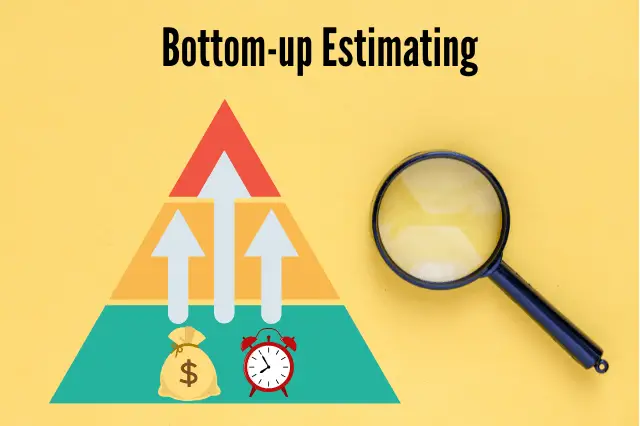
What Is Bottom-Up Estimating? It is a method where project costs and time are calculated starting from the smallest tasks. By using this approach, managers can see every detail clearly. This helps prevent delays, overspending, and mismanaged resources, making planning more reliable and effective.
Moreover, bottom-up estimating allows teams to assign resources, estimate labor, and track costs more precisely. It also helps identify risks, task dependencies, and potential issues early. As a result, projects stay on schedule, and teams can make informed decisions throughout the process.
Understanding bottom-up estimating is essential for effective project management. In this blog, we will explain what it is, compare it with other methods, show how to use it, and highlight tools that make it easier to apply.
What Is Bottom-Up Estimating?
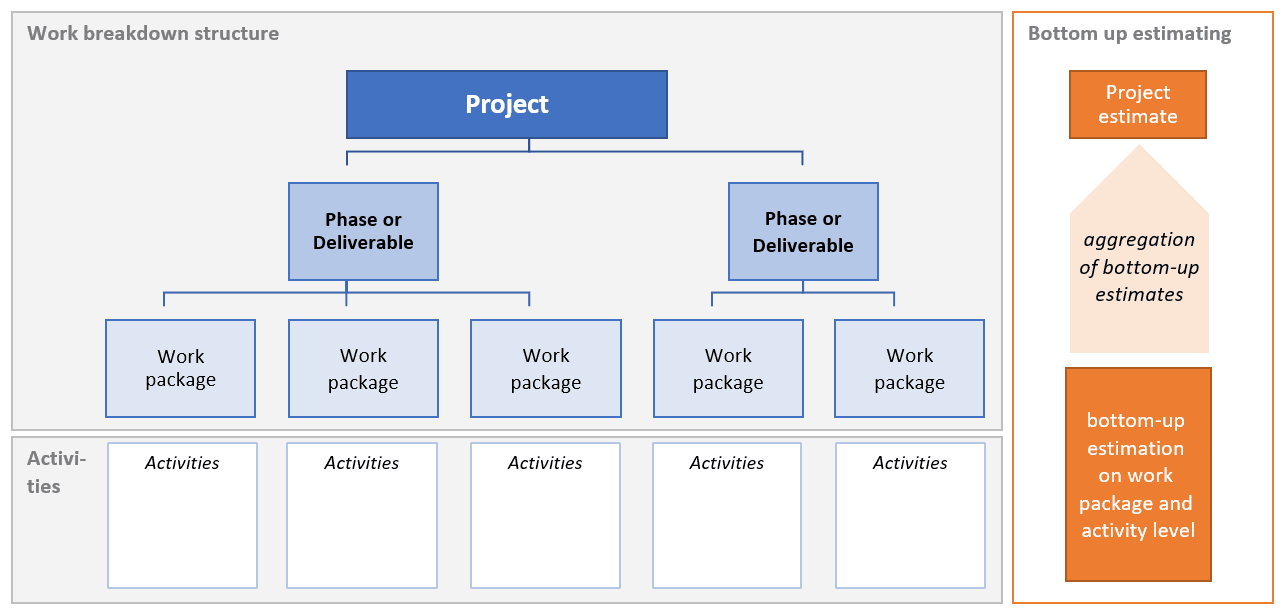
As the name suggests, bottom-up estimating involves calculating a project’s duration by summing the durations of smaller tasks. According to the PMBOK, this method estimates costs and time from the lowest level, such as work packages or activities in the Work Breakdown Structure.
By understanding what is bottom-up estimating, project managers gain a clearer view of all project elements early on. Bottom-up estimating is usually more accurate than other methods because it considers every detail. Therefore, learning bottom-up estimating through a PMP course is a smart step for anyone aiming to become a skilled project manager.
What Are the Differences between Bottom-Up, Top-Down, and Parametric Estimating?
It’s essential to understand how bottom-up differs from other methods, such as top-down and parametric estimating.
Estimating Method | Key Points | How It Differs from Bottom-Up |
Bottom-Up Estimating | Estimates begin with the most minor tasks, such as work packages or activities. | Focuses on detailed, granular components. |
Top-Down (Analogous) Estimating | Uses historical data from similar projects to estimate duration or cost. | It can be applied at any level, not just detailed tasks. |
Parametric Estimating | Uses mathematical formulas or parameters, like cost per square foot or lines of code. | Relies on measurable data instead of detailed task breakdowns. |
Expert Judgment | Relies on opinions of experienced team members for estimates. | Can complement bottom-up estimates where data or parameters are lacking. |
How To Use Bottom-Up Estimates in Project Management
To use bottom-up estimating, follow a step-by-step process to break down tasks and build accurate cost and time estimates.
1. Break Down the Project Scope
First, divide the project into deliverables, work packages, and tasks. Capture all small components in a Work Breakdown Structure (WBS) to estimate at the lowest level.
2. Estimate Effort and Cost for Each Task
Next, calculate the effort, resources, and cost for each task. Consider labor hours, hourly rates, and material costs. Ask team members for input on how long each task is expected to take.
3. Roll Up Task Estimates into Deliverables
Then, combine the task estimates to determine the costs and effort for each main deliverable. This links each estimate directly to project goals.
4. Accumulate Deliverable Estimates for Total View
After that, add all deliverable estimates to calculate the total project cost and effort. The total is built from the ground up using detailed analysis.
5. Identify Risks and Issues
Finally, look for risks, resource limits, or task dependencies. Identify and address these issues proactively by creating plans to address them.
When to Use Bottom-Up Estimating in Project Management
Knowing when to use bottom-up estimating helps improve accuracy and project success. This method works best in these situations:
- New or Unique Projects: Start from scratch when no similar projects exist.
- When You Need Precise Estimates: Bottom-up gives accurate numbers for essential projects.
- At The Start Of An Energetic Project: Estimate initial tasks before using simpler methods.
- Test Planning: Break down all parts to figure out the required tests.
- Complex Projects: Many moving parts require detailed analysis for accurate time and cost management.
- For New Teams or Ways of Working: Existing data may not align with new workflows.
- Flexible Projects: Works Well When Timelines And Budgets Can Change.
- When cost matters a lot: Careful estimates protect profits in fixed-price projects.
However, avoid bottom-up estimating for projects with tight deadlines or fixed schedules. It takes a lot of time.
Bottom-up Estimating Advantages and Disadvantages
Before deciding on an estimation method, it’s helpful to weigh the advantages and disadvantages of bottom-up estimating.
Advantages of Bottom-Up Estimating | Disadvantages of Bottom-Up Estimating |
Provides a clear understanding of all project components. | It may overlook additional tasks, such as overhead or work required to combine different parts. |
Allows team members to take responsibility for their tasks. | Requires significant time and is not suitable for projects with short deadlines. |
Helps managers understand work packages and spot potential barriers early. | Potential for cost overruns if some costs are underestimated. |
Reduces overall risk for each project phase. | Not all companies can implement it due to the required coordination. |
Estimate errors can balance across different work packages. | The personal agendas of team members may bias estimates. |
Enables smarter decisions and avoids costly surprises in the future. | Requires significant effort and input from multiple team members. |
Increases team autonomy and productivity. | It can be complex for large-scale or highly detailed projects. |
How Project Management Software Helps Bottom-Up Estimating
Project management software makes bottom-up estimating easier and more accurate.
- First, it helps with task management. You can break your project into small tasks and sub-tasks.
- Next, it simplifies resource allocation. You can quickly assign people, equipment, and materials to each task.
- Also, it provides estimating tools. Built-in templates, calculators, and charts help you calculate resources correctly.
- In addition, it improves collaboration. Team members can share estimates and updates in real-time, keeping everyone informed and up-to-date.
- Finally, it allows data analysis. You can review past projects to identify patterns that enhance your estimates.
Expert Tips for More Accurate Bottom-Up Estimates
To create accurate bottom-up estimates, project managers can use strategies to improve precision. Here are some expert tips to make task-level estimates more reliable:
1. Involve Subject Matter Experts
One of the most effective ways to enhance accuracy is to involve subject matter experts (SMEs). These experts have hands-on experience with specific tasks and can give valuable insights. By working with them, managers can estimate each task more realistically. Additionally, SMEs can identify potential risks or challenges that may be overlooked during initial planning.
2. Use Historical Data
Another effective strategy is to use data from past projects. Historical data shows the actual costs, durations, and resources used in the past. By reviewing similar projects, managers can see patterns and adjust current estimates. This approach reduces guesswork and makes estimates more reliable.
3. Re-Evaluate and Adjust Estimates
Regularly reviewing and updating estimates is essential. As the project progresses, new information may necessitate adjustments to timelines, costs, or resources. By re-evaluating, managers can stay on track and plan for unexpected delays using contingency measures.
FAQs
What Is A Bottom-Up Calculation?
A bottom-up calculation adds costs or time for each small task. Then, it combines them to get the total project estimate. This ensures accuracy because every detail is considered.
What Is A Real-Life Example Of Bottom-Up Processing?
For example, when building a house, estimate each room separately, including labor, materials, and the time required. Next, add all estimates together. This method ensures a complete and accurate total project cost.
What Is The Main Characteristic Of Bottom-Up Estimating?
The main characteristic is a detail-focused approach. Each task is estimated separately. Then, all task estimates are combined to provide an accurate total for the project.
What Tools Are Commonly Used In Bottom-Up Estimating?
Common tools include spreadsheets, project management software, and estimating templates. Spreadsheets organize tasks and calculations efficiently. Project management software tracks resources, time, and costs. Templates, calculators, and charts simplify estimates. Together, these tools make bottom-up estimating faster and more accurate.
How Accurate Is Bottom-Up Estimating?
Bottom-up estimating is highly accurate if all tasks and resources are accurately accounted for. However, missing details or incorrect assumptions can lower its accuracy.
Conclusion
Accurate project planning requires a thorough understanding of every task. Understanding “what is bottom-up estimating” helps calculate time and costs from small tasks.
This method allows efficient resource allocation, precise cost tracking, and early risk identification. Additionally, understanding what is bottom-up estimating improves decision-making and reduces surprises during project execution.
In summary, applying bottom-up estimating ensures smarter, more reliable project management.
Keep your construction projects running smoothly with Prime Estimation. For reliable and detailed estimates, contact us today.